
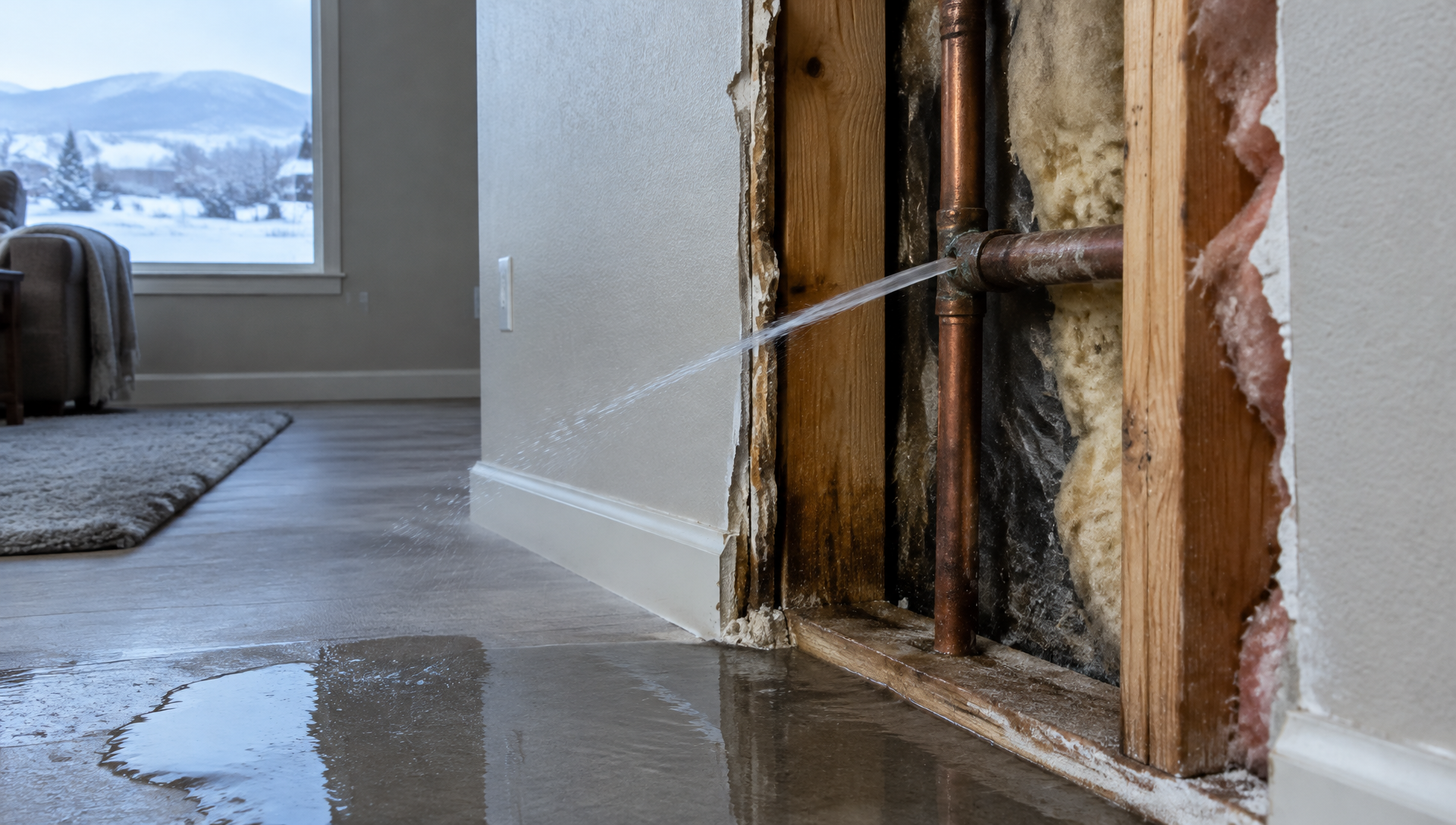
When the temperature drops overnight in the Truckee Meadows, a pipe that froze inside a garage wall or crawlspace can split open the moment it thaws. Burst pipe water damage in Sparks, NV, tends to happen fast and spread quietly, soaking drywall, insulation, and subfloor well past the puddle you can actually see. Here is what to do in the first hour, what to skip, and how professional water damage restoration in Sparks helps get your home dry the right way.
Why Burst Pipe Water Damage Spreads So Fast in Sparks Homes
Northern Nevada winters bring cold nights followed by milder afternoons. That freeze and thaw cycle is hard on plumbing, especially pipes that run through exterior walls, unheated garages, attics, and crawlspaces. As water freezes it expands, pressure builds inside the line, and a crack can form that stays hidden until the ice melts.
Once water flows again, it comes out under full supply pressure and keeps going until someone shuts it off. It runs along framing, wicks up into drywall, and settles under flooring and cabinets. By the time you notice a wet ceiling or a soft spot in the carpet, the water has usually traveled farther than it looks.
First Steps After a Pipe Bursts
Shut off the water
Your first move is stopping the flow. In many Sparks and Reno homes, the main shutoff valve is in the garage, near the water heater, or where the supply line enters the house. If you have never looked for yours, take a minute this week to find it and make sure it turns. That small step can make a big difference on a cold night.
Stay safe around electricity
If water is near outlets, appliances, or your electrical panel, do not wade into it. Only turn off power to the affected area if you can reach the panel from a dry spot. If a ceiling is sagging or bulging with water, keep everyone out from under it.
Document what happened
Before you move much, take photos and video of the wet areas, the damaged pipe if you can see it, and any affected belongings. Jot down when you found the leak. Those notes can help later when you talk with your insurance carrier.
Move what you can
Lift furniture off wet carpet, pull area rugs out of the water, and get electronics, paperwork, and keepsakes to a dry room. Small steps like these can help protect belongings while you wait for help.
What Not to Do After a Pipe Bursts
It is natural to want to jump in and fix everything yourself. A few common reactions can make the damage worse, though:
Do not use a household vacuum on standing water. Regular vacuums are not built for it and can create an electrical hazard.
Do not just turn up the heat and wait. Surfaces can feel dry to the touch while the wall cavity, insulation, and subfloor stay wet underneath.
Do not start cutting into walls or ceilings. Opening up wet materials without the right equipment can spread moisture and, if mold is already present, disturb it.
Do not wait to see if it dries on its own. Water left in building materials tends to lead to warping, swelling, odors, and other problems the longer it sits.
How Professionals Dry Out Burst Pipe Damage
Once the pipe is repaired and the water is off, a restoration team focuses on getting the structure dry and documenting the process. That usually starts with extracting standing water, then mapping moisture with meters and thermal imaging to find where the water traveled inside walls and under floors.
Materials that cannot be dried effectively, such as saturated insulation or badly swollen drywall, may need to be removed. Then air movers and dehumidifiers go to work, and technicians take readings until the materials reach their drying goals. If you are not sure how far the water went, our guide to the hidden signs of water damage covers what to watch for, and you can read more about what to do after water damage in general.
When a Burst Pipe Leads to Mold
Wood, drywall, and insulation that stay damp can support mold growth. That risk goes up if a pipe burst while you were away for the holidays and the water sat for a while before anyone found it. If you notice a musty smell or spotting after a leak, mold remediation in Sparks may be part of the recovery. After remediation, learn why mold clearance testing matters and how post-remediation verification supports a complete closeout.
When the Water Is Not Clean
A broken supply line usually releases clean water. A cracked drain or sewer line is a different story. If the water smells foul, looks discolored, or is coming up through floor drains or toilets, treat it as contaminated and keep people and pets away. That situation calls for professional sewage cleanup in Sparks, and our post on what to do first after a sewage backup walks through the safety basics.
A Word About Insurance
Many homeowners policies address sudden and accidental water damage, but coverage varies by policy. Some policies treat long-term leaks or gradual seepage differently, and mold coverage is often limited or excluded. The best move is to review your own policy and talk with your agent or carrier about your situation. COIT Cleaning and Restoration works with insurance carriers and can provide photo, moisture, and drying documentation to support the process.
Preventing Frozen Pipes This Winter
A little prep before the next cold snap can help. Insulate exposed pipes in the garage and crawlspace, disconnect garden hoses from outdoor spigots, and keep the heat on if you travel. On especially cold nights, opening cabinet doors under sinks on exterior walls lets warm air reach the plumbing, and letting a faucet drip can help keep water moving. And again, know where your main shutoff is.
Frequently Asked Questions
Can I dry burst pipe water damage myself?
You can handle small, surface-level spills, but water from a burst pipe often reaches places you cannot see. Without moisture meters, it is hard to know when walls, insulation, and subfloor are truly dry, which is why many homeowners call a restoration team.
Should I call a plumber or a restoration company first?
Usually both. Shut off the water first, then a plumber repairs the pipe while a restoration company handles water removal, drying, and documentation. COIT focuses on the cleanup and drying side, so you can call us any time, day or night.
How long does it take to dry out a home after a burst pipe?
It depends on how much water was released, how long it sat, and what materials got wet. Drying is guided by moisture readings rather than a set number of days, and the job is not finished until the readings confirm it.
24/7 Burst Pipe Cleanup in Sparks and Reno
COIT Cleaning and Restoration provides 24/7 water damage restoration in Sparks and serves Reno, Spanish Springs, Sun Valley, and surrounding communities. Our IICRC-certified team handles extraction, structural drying, and documentation for burst and frozen pipe losses. You can learn more about our local team on the COIT Cleaning and Restoration home page.
If a pipe has burst in your home, shut off the water and call COIT Cleaning and Restoration at 775-322-4266. A local team member will walk you through what to do next and get the drying process started.
Dealing with a burst pipe?
Our certified team responds 24/7 across Sparks and Reno.